



Why Does Milwaukee Have So Many Nicknames? A Guide to Our City’s Identity
Fresh Coast. Cream City. The Good Land. Home to miles of Lake Michigan shoreline, deep-rooted brewing traditions and distinctive brick architecture, Milwaukee is too multifaceted to be defined by a single nickname.
For some, we’re Brew City, marked by beer gardens and German influence. Others may consider us the City of Festivals, thanks to the more than 100 annual events that celebrate our heritage, arts and people.
Each reflects a different part of Milwaukee’s identity. These are the stories behind our best-known nicknames.

The Story Behind the Cream City Name
Milwaukee’s Cream City nickname might have you thinking of frozen custard, when it’s actually a nod to its brick architecture. Made from local clay with a creamy-yellow hue, the bricks illuminate some of its most famous buildings and help preserve a colorful side of the region’s history.
Cream City Brick
To get to the root of Cream City, start at the last Ice Age. That’s when receding glaciers left behind clay rich in magnesium and calcium, which turns bricks a creamy yellow when fired in kilns. During the 1840s and 1850s, these bricks laid the foundation for Milwaukee’s earliest construction boom. Although mass production ended in the 1930s, many buildings still showcase the lighter brick’s hues.
Cream City Architecture Today
You can see Cream City brick at several of Milwaukee’s best-known buildings. Stroll through The Brewery District. The Pabst Brewery Company campus has been reborn into one of Milwaukee’s newest downtown neighborhoods. It may be a modern district, but thanks to preservation efforts, you can still see classic Cream City buildings like the Brewhouse Inn & Suites in the former Pabst Brewery Brew House and the Malt House, now home to apartments that contain preserved kilns and brewery artifacts.
Just north of downtown, several 19th-century buildings from the former Schlitz Brewery Complex remain as part of a cream-colored modern office campus. These include the New Renaissance-style Stock House, the timber-clad Bottlehouse and the Powerhouse building, which features a mural honoring Milwaukee’s brewing past.
Find more Cream City architecture at downtown destinations like Gothic-style Trinity Evangelical Lutheran Church, the industrial-era Pritzlaff Building and Turner Hall Ballroom, where you can catch a show in a National Historic Landmark built with Milwaukee’s signature brick.

Milwaukee’s Brew City Heritage
Here, brewing history runs deep. Along with fruitful farmland, fresh water and German immigrants who brought brewing traditions to town, Milwaukee boomed into Brew City thanks to malty legends like Miller, Pabst, Schlitz and Blatz. Today, with over 50 modern craft breweries in Milwaukee County, beer is still a source of local pride.
Brewing’s Role in the City’s History
Brew City was built as much by beer as it was by bricks. While the landscape, weather and waters paved the way, German brewers played a huge role in influencing Milwaukee’s beer brewing culture.
One of the region’s oldest industries began in 1840, when Simon Reutelshofer opened the city’s first German brewery, followed by Frederick Miller’s founding of Miller Brewing Company in 1856. By 1859, there were at least 35 independent breweries powering the economy, defining new traditions and cementing Milwaukee as the “Beer Capital of the World.”
What made it possible was the local natural resources, including frozen lakes for ice, farm-fresh grains and hills used for lagering caves, as well as German immigrants who introduced their knack for brewing and their love for communal gathering.
By the late 19th century, the city claimed four of the world’s most prominent breweries: Miller, Pabst, Schlitz and Blatz. The brewery established by Jacob Best in 1844 later became Pabst Brewing Company, whose legacy can still be seen today at landmarks including the Pabst Mansion, Pabst Theater and the historic Pabst brewery site. Schlitz became known as “the beer that made Milwaukee famous,” while Blatz pioneered bottled beer production, helping its beer reach consumers beyond Milwaukee.
That Brew City spirit continues today, as modern brewers honor the legacies of these brewing pioneers while crafting traditions of their own.
Milwaukee is a city built by beer. It's the true Brew City that, at its peak, was the brewing capital of the world, and for generations, has brought barrels and kegs and glasses of liquid gold to…
A Taste of Brew City
Today, you can tap into Brew City tradition on brewery tours and, of course, in a pint glass. The Brew City Trail provides one of the best ways to experience Milwaukee’s brewing past, present and future. This self-guided journey connects historic brewery sites and landmarks with modern taprooms and lakeside beer gardens.
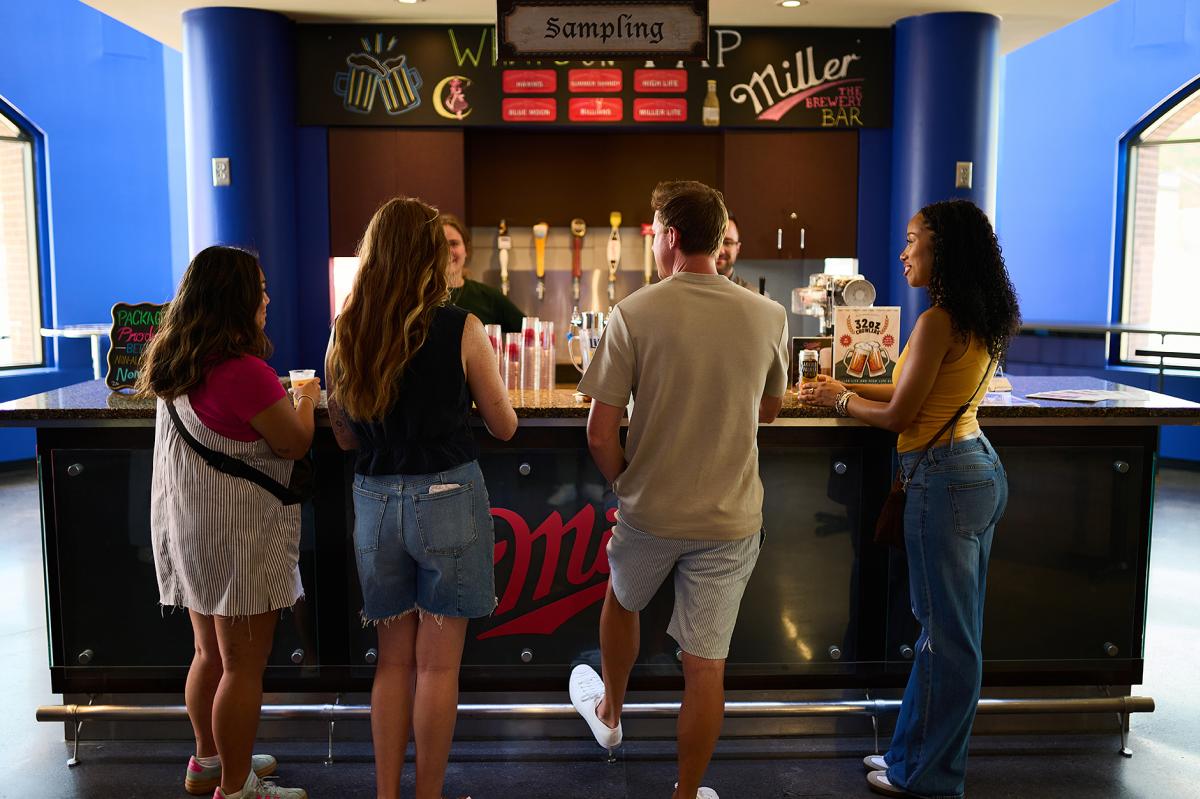
Live the (Miller) high life on a Miller Brewery Tour, where 21+ guests sample beers as you explore landmarks, underground caves and the Bavarian-style Miller Inn.
Beyond the tours, you’re never far from your next Miller in Milwaukee, as the iconic brew can be found on tap at beer gardens, at locally loved dive bars and even on James Beard Award-nominated menus. Dozens of modern craft breweries can also be found throughout our neighborhoods.
Lakefront Brewery and Sprecher Brewery Company launched a new brew era in the ’80s and ’90s, inspiring local favorites like Eagle Park Brewing & Distilling, Third Space Brewing and Ope! Brewing Co.
More Milwaukee Nicknames
Other nicknames highlight the city’s rich history, lakeside geography and cultural identity. In fact, the earliest nickname predates any other by centuries. The name “Milwaukee” comes from an Algonquin word, “Millioke,” meaning “good land,” and from a Potawatomi word, “Minwaking,” meaning “gathering place by the waters.”
Locals and visitors may also recognize Milwaukee by several other names, including:
- Fresh Coast: Lined with sandy beaches on Lake Michigan, Fresh Coast is an apt nickname for a city that draws surfers, fishermen and water technology companies to America’s Freshwater Capital.
- 414: The city’s area code is more a source of pride than a phone number. On April 14 (4/14), locals celebrate with a full day of events, entertainment and limited-edition merchandise.
- City of Festivals: Milwaukee earned the nickname City of Festivals thanks to more than 100 annual events, including German Fest, Milwaukee Film Festival, PrideFest (Wisconsin’s biggest LGBTQ+ festival) and the world’s largest music festival, Summerfest.
- City of Steeples: Beer wasn’t the only thing inspired by immigrants. Milwaukee neighborhoods are lined with church steeples, earning the nickname the City of Steeples.
- Culinary Capital of the Midwest: Known as the Culinary Capital of the Midwest, Milwaukee’s food scene has earned national recognition. It was named one of six destinations in the MICHELIN Guide’s new American Great Lakes region, and its prominent role in Season 21 of Top Chef highlighted the culinary creativity found throughout the area. Meanwhile, James Beard Award-winning restaurants like The Diplomat and Sanford Restaurant also add to a dining scene rooted in local favorites, including classic cheese shops and relish trays.
- Smallwaukee: This might sound odd for a city of over half a million residents, but it’s a testament to the city’s charm and how (despite its size) it still feels close-knit and connected.

What Makes Milwaukee Different from Other Great Lakes Cities?
Milwaukee combines many of the qualities that define Great Lakes destinations, but in a way that is entirely its own. Few cities can match the combination of brewing heritage, Cream City architecture and a lakefront that’s at the very heart of everyday life.
Distinct neighborhoods give each corner of the city its own character, while a nationally recognized food scene and a packed festival calendar showcase the region’s creativity and community spirit.
To truly understand it, come experience Milwaukee for yourself and discover why no single nickname can capture it all.
Brew City Unfiltered: A Coffee Chat with Anodyne’s Head Coffee Roaster John Malone
Milwaukee, the Brew City. It’s a destination defined by its brewing roots, with landmarks bearing the names of late beer barons, active beer giants still churning out the…
The Intern's Guide to Milwaukee: Places to Eat, Things to Do and Places to See
Visit Milwaukee offers local college students a chance to learn the ins and outs of hospitality and marketing through its internship program. We asked our interns about their…
What Makes Milwaukee So Queer?
Milwaukee doesn’t brag about its vibrant LGBTQ+ community. In true Midwest fashion, Milwaukee is humble. This is a city that won’t tell you - it will show you…
Coming in 2026: Milwaukee's New & Upcoming Developments
Milwaukee really showed off in 2025. Baird Center scooped up local and national awards like it was its full-time job. The Milwaukee Brewers captured the hearts of baseball fans…
What Tourism Really Means for Milwaukee (And Why It Matters Right Now)
It’s morning in Milwaukee. The sun crests Lake Michigan’s horizon, painting the grey waters in shimmering hues of blue. Natural splendor gives way to the bustle of…
Destination Professionals Day: Meet the Team Behind Visit Milwaukee
On February 19, we celebrate Destination Professionals Day, a day dedicated to the people who help bring visitors, meetings and major events to communities across the country…
Fonz's Finest Fits: Happy Birthday to a "Happy Days" Icon
For nearly 20 years, the Bronze Fonz has lived along the Milwaukee RiverWalk. Since his installation in 2008, he’s been a man of many faces, styles and costumes, wearing…
Your Official Deer Widows Weekend Itinerary: 36 Hours of Cocktails and Charm in Milwaukee
So your partners are off in the woods, and you? You’ve got a hotel key in one hand, a martini in the other and no plans to take it easy. Welcome to Deer Widows Weekend in…
Michigan to Milwaukee by Water: A Trip Aboard the Lake Express Ferry
If you’ve ever planned a trip in the Great Lakes region, there’s a good chance you’ve thought some version of, "I wish there was a faster way to get…
What Ike Likes: Ike Wynter’s Top 10 Milwaukee Spots
Ike Wynter is a cut above the rest. Under a shrouded cloud of sawdust, the Milwaukee-based artist has quietly made a name for himself, earning national media attention for his…
Taylor & Travis Forever: 12 Milwaukee Wedding Venues Inspired by America’s Favorite Couple
Today was supposed to be a normal day. It was supposed to be a Tuesday like any other. Then something happened. Something momentous. Global superstar Taylor Swift and her…
Visit Milwaukee Celebrates Our Volunteers
As we roll along on our National Travel and Tourism Week celebration today, we’d like to recognize our volunteers. Often the first face a visitor sees when they arrive at…
414 Day in Milwaukee 2025
In Milwaukee, it’s all 4 1 and 1 4 all on 414 Day. A day mirroring the city’s area code (414), on April 14 every year, Milwaukee swells to a fever pitch in a grand…
Popular Lakefront Attraction Missing
(April 1, 2025, Milwaukee, Wisc.) – The popular Milwaukee attraction, Deep Thought, was reported missing today. The recent addition to the city’s list of icons was…
Plan Your Dream Itinerary with the Milwaukee Digital Visitors Map
Introducing your new favorite tool to explore the Cream City, the Milwaukee Digital Visitors Map! This interactive digital counterpart to the popular Official Visitors Map also…