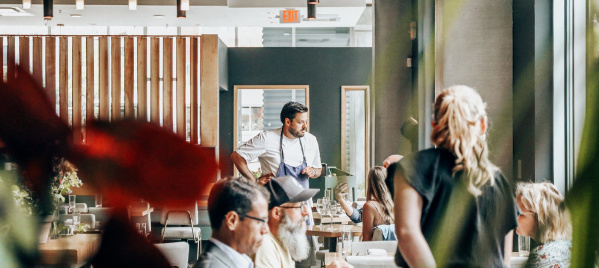






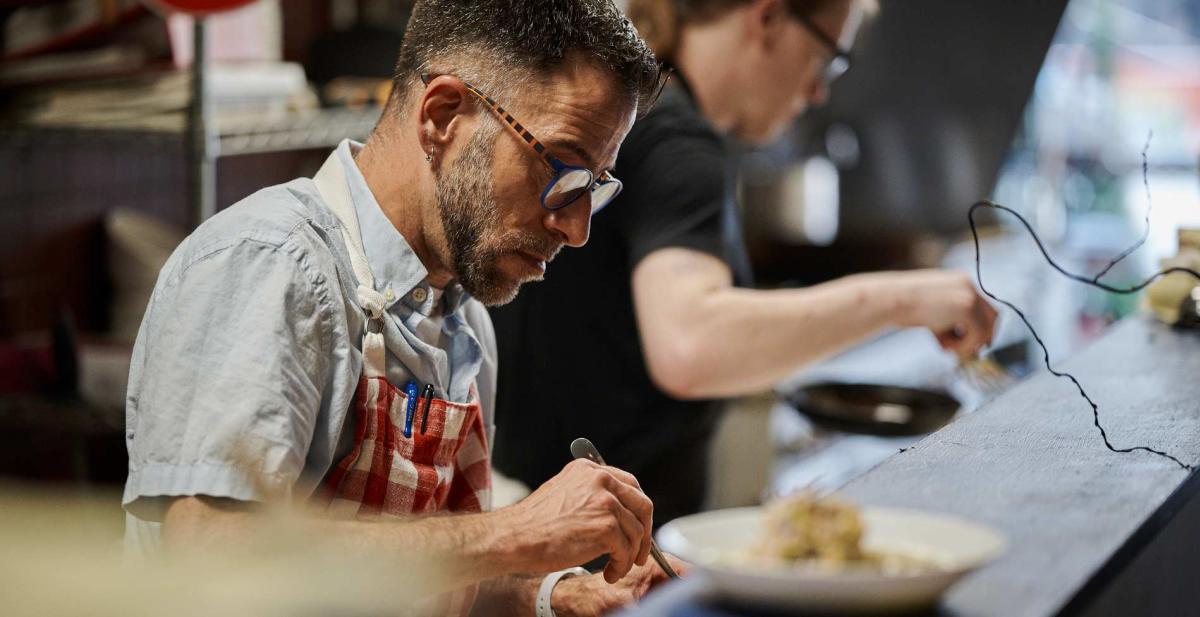
For more than 15 years, Chef Gregory León has made his mark on Milwaukee’s culinary community. His downtown restaurant, Amilinda, has earned him recognition from the James Beard Foundation for Best Chef: Midwest in 2022 and 2023, and Outstanding Chef in 2024 and 2025.
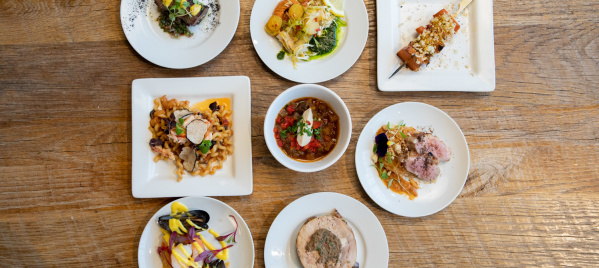
León’s path to Milwaukee has taken him through Spain and San Francisco, experiences that helped shape Amilinda’s rotating menu of Spanish and Portuguese dishes. Over the years, the restaurant has also become a community gathering place where people can relax, unwind and be themselves.
León recently appeared in the debut episode of “Humble Kitchen,” a new series from Todos Media focused on immigrant kitchens and the people whose stories have helped shape the American culinary experience. In the episode, León reflects on his life, his career and the experiences that shaped him as a chef.
We sat down with Chef León to talk about his appearance on “Humble Kitchen,” the importance of community and the evolution of Milwaukee’s culinary scene.
Q: How did you get involved with the Humble Kitchen series, and what excited you about the project?
They reached out to me, and they emailed me saying that they wanted to talk to me about a new project that they were working on. I love radio. I love podcasts. TV is always kind of weird for me because I just don't really love the way I look and sound on TV.
After I read the email, I was like, "I'm not going to do this." For a lot of reasons, that wasn't the only one. They just really managed to convince me to do it. They were like, "You should do this. It should be great."
What got me excited about the project was the prospect of being able to tell my story and then have that story help other people who might be in the same situation I was in. That's one of the main reasons I did it.
Q: Your episode is the first in a series that focuses on immigrant kitchens and their impact on the American culinary experience. What does it mean to you to be featured in that?
The American restaurant industry was built, or is built, and is still being built on the back of immigrant labor. Every kitchen that I worked in in San Francisco was full of migrant workers. These people come here and bust their backs.
I'm glad that we can talk about immigrants and immigrant labor. I feel like that needs to be a bigger part of the conversation.
Q: Your restaurant has become a community hub. Why was it important to build a welcoming space for people of all backgrounds?
I wish I could say that was part of the business plan or part of the idea. It wasn't really a plan. We wanted people to feel welcome. It was never like, "I want to turn this into a type of community center."
It just slowly evolved into that, I think, because of the people who work there and because of the people who came to visit or came to eat.
Now I can't imagine having a restaurant that's not that way.
The world's a pretty tough place, and if we can provide a space for people to feel welcome, safe, warm and happy, and they can forget the world outside for 30 or 45 minutes, or however long they're visiting us, great. That's a bonus.
That makes me happy. This space that means so much to me also means so much to other people who are basically guests and have no involvement in it. It was never their dream.
I can't even describe the feeling when I go in there, and I look and see these people who, some of them didn't even know who the hell I was a year ago, and they work there, and they love being there. I've had staff members tell me, "Oh man, this is my safe space. This is the place I like to be in."
Q: You've been in Milwaukee long enough to see a pretty dramatic shift in the culinary scene over the last decade or so. How has the city's food scene evolved, and where do you see it going in the next 10 years?
I think it's only gotten better every passing year. There are incredibly talented people in the city. A lot of really talented people. I see the food scene exploding even more.
There are a lot of young cooks, sous chefs and chefs de cuisine who are working under some of these really amazing chefs who are just incredibly talented. I'm very excited to see where they go in their careers.
I can think of at least two people off the top of my head where I'm just like, "I want to fast-forward and see where you're going to be in 10 years," because I have a feeling they're just going to be super amazing.
They're hungry for knowledge, and they want to learn. Not only are they great at the cooking part, the actual chef part, but they're also all really great humans.
I'm excited to see another wave of, hopefully, future restaurant owners and restaurateurs that open great restaurants and turn out great food, but also do what these students do, which is turn it into community.
I feel like the days of restaurants being this space where you go and spend some money for some pretty food on a cute plate where a nice, fun chef is cooking for you are over. Or I hope those days are over.
I hope a lot of people realize, "Okay, I can use my space not only to feed people and serve great food but also make my community a better place."
Q: You've spent several years as a James Beard Award semifinalist or finalist. Looking back on that stretch of time, what are you most proud of?
Being able to keep the restaurant alive. Being able to reopen our doors.
We got nominated in '22, '23, '24 and '25. Being able to come back from the brink because of the pandemic, I'm pretty proud of that.
I've always said those nominations and semifinalist nominations are a testament to the people who work there. I don't do everything. I don't know everything. It's a group thing.
I think it's a really good representation of the people who have been there. That's what I'm proud of.
I run the kitchen a little bit differently than I think most people do. Yes, everybody knows I'm the chef. I have the final say on what goes on the menu. But I don't know everything. I would be lying if I sat here and said, "Yeah, every Wednesday I came up with five new dishes just like that."
I don't need to take credit for other people's work. I'm pretty confident in what I do, so I like my kitchen to be an environment where there's collaboration.
The sous chef, the chef de cuisine or the chef de partie will come to me, and they'll go, "Chef, I had this dish the other day," or, "I saw this on TV. How can we use this?" or, "How can we incorporate a dish like that into the menu?"
Then we start working through the add-ins. You push it a little bit more toward this way. It feels a little Asian-y, or it feels a little Latin American. What if we take this out and do this?
I think I'm proud of all the dishes that we come up with collaboratively.
Although the brisket on the menu right now is incredible. If you made me pick one, I would probably pick that one. It's so good. That also grew out of a conversation with my chef de cuisine.
Q: If somebody is coming to Amilinda for the first time, is there a dish you'd recommend? Is there one that tells Amilinda's story through food?
It's hard for us to answer these kinds of questions because our menu changes every week.
This week, if somebody came in and was like, "I want a dish that's going to tell Amilinda's story," I like the steak, so I would probably go with that.
But the chicken right now is another one. We're working on this cookbook at the moment, and a lot of the recipes either don't have instructions, so we're having to go back and reformulate a lot of them.
We have a chicken dish on there that we did a version of when we opened 11 years ago, and I was like, "God, I don't really like this," and just kind of set that dish to the side.
We recently revisited it, and I think that would be a good one. I think it's a good dish to really demonstrate the evolution of the restaurant and the evolution of our culinary repertoire, perhaps. It's really good.
If you like spicy food, come in on a Wednesday. On Wednesdays between 5 and 7 p.m., we have what's called peri-peri chicken happy hour.
Peri-peri chicken is a traditional Portuguese dish. It's one of the few dishes that we have that's spicy. We use peri-peri peppers, which made their way into Portuguese cooking through the slave trade because the pepper is from West Africa.
If you've never been, I feel like that's a good introduction to Amilinda.
Q: Is there anything else you want people to know?
Watch the “Humble Kitchen” series.
Share it. If anybody watches it and you really like it, it resonates with you, or you think it might help somebody, please share it. The more eyes that we can get on it now, the better it's going to be.
The restaurant industry right now is going through another sort of pandemic situation where costs are incredibly high.
The independent restaurant right now is really struggling. Go visit your independent restaurant.
We understand that people at home are struggling too. Groceries are crazy. Gas is crazy. But if you are so inclined to go out and eat dinner, make sure you go into a small, independent restaurant.