




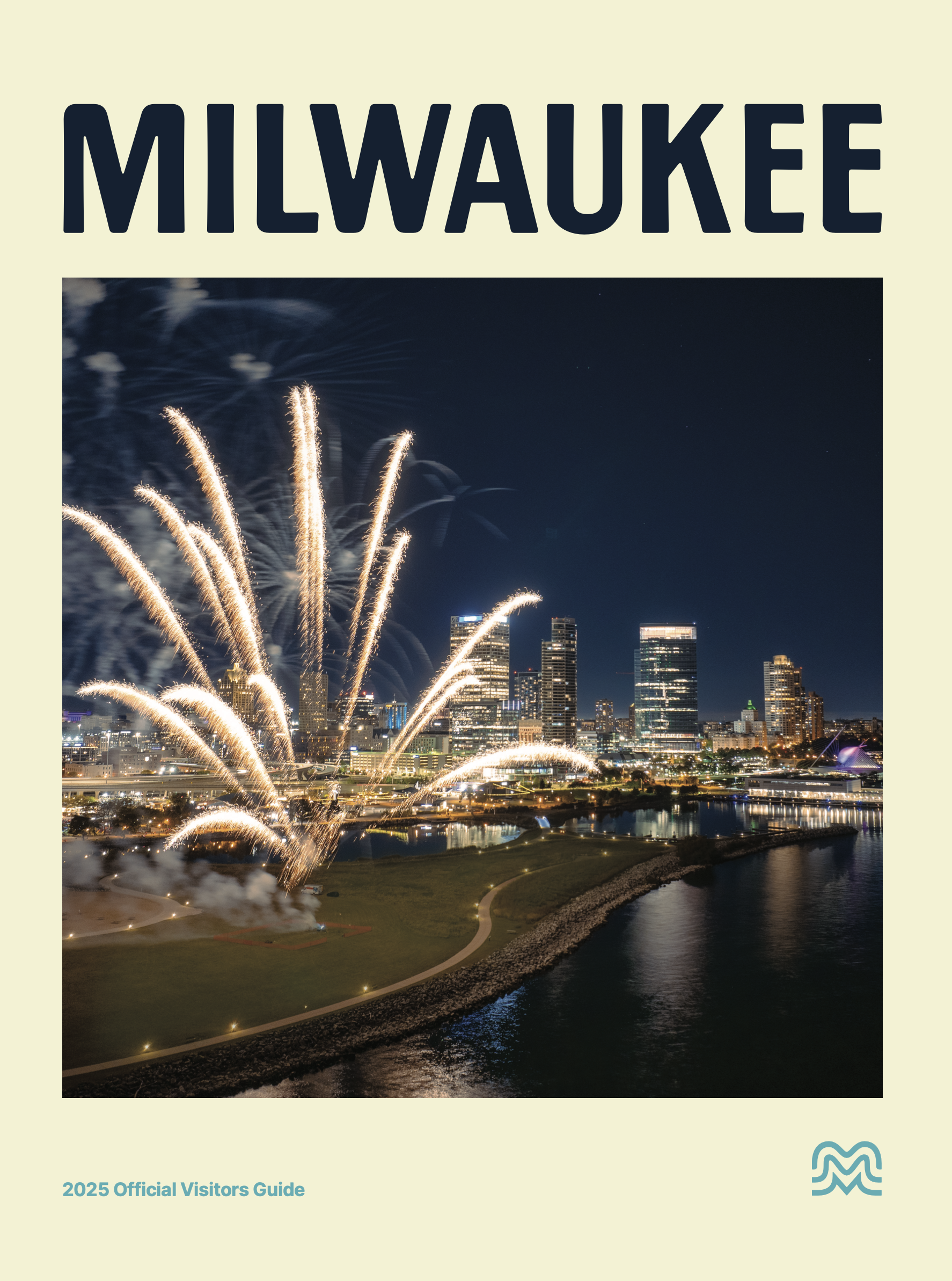
Milwaukee’s story isn’t only told in words or pictures. It’s also written in stone, glass and steel. The city’s architecture traces its evolution from the brewing boom through Frank Lloyd Wright’s visionary designs and into the modern masterpieces shaping its skyline today.

Pabst Mansion (1892)
One of Milwaukee’s first architectural landmarks fittingly carries the hue of the beer that built the city. Captain Frederick Pabst’s Flemish Revival mansion, completed in 1892, showcases Brew City luxury, including custom Italian floors, hand-carved woodwork and banisters capped with hops. Once home to Milwaukee’s beer royalty, the mansion now welcomes visitors inside to relive the city’s golden age of brewing.
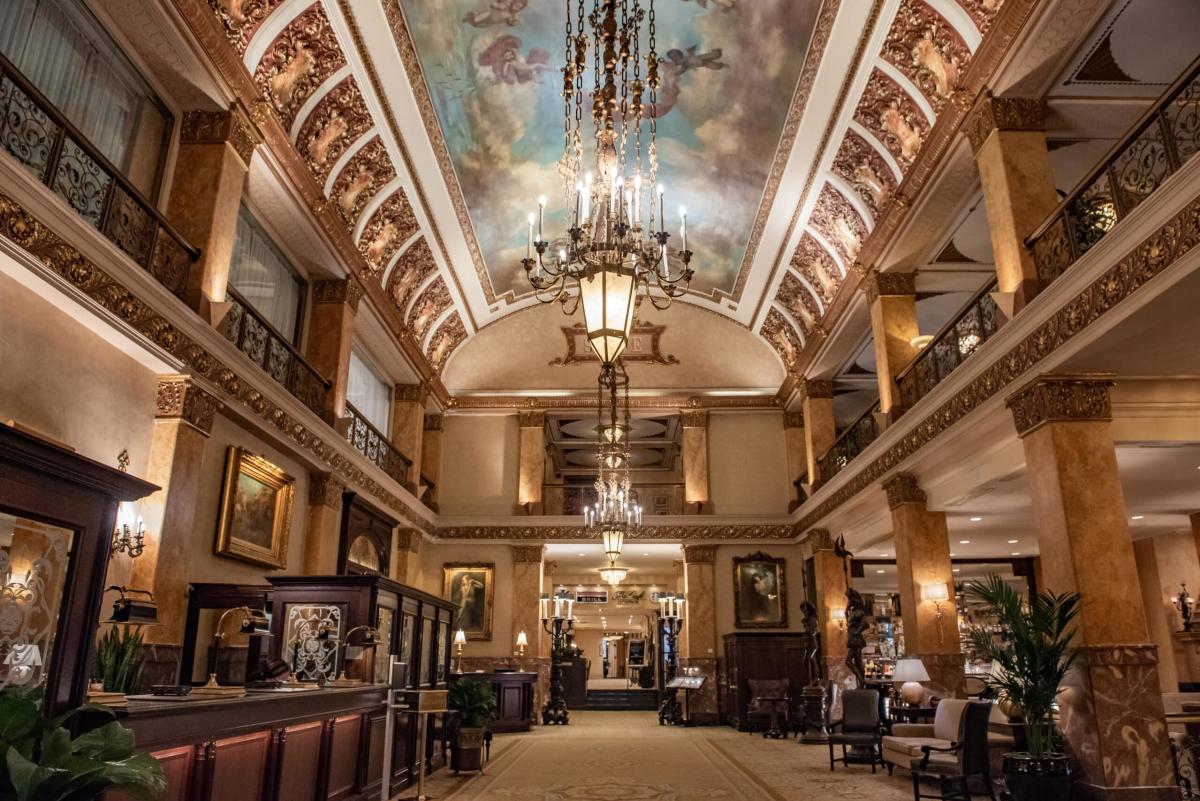
The Pfister Hotel (1893)
The Pfister debuted as Milwaukee’s ornate calling card to the world. This Romanesque Revival gem set a new standard for Midwest hospitality with marble staircases, Tiffany glass and a vast Victorian art collection. More than a hotel, it’s a living museum of the city’s elegance and ambition.
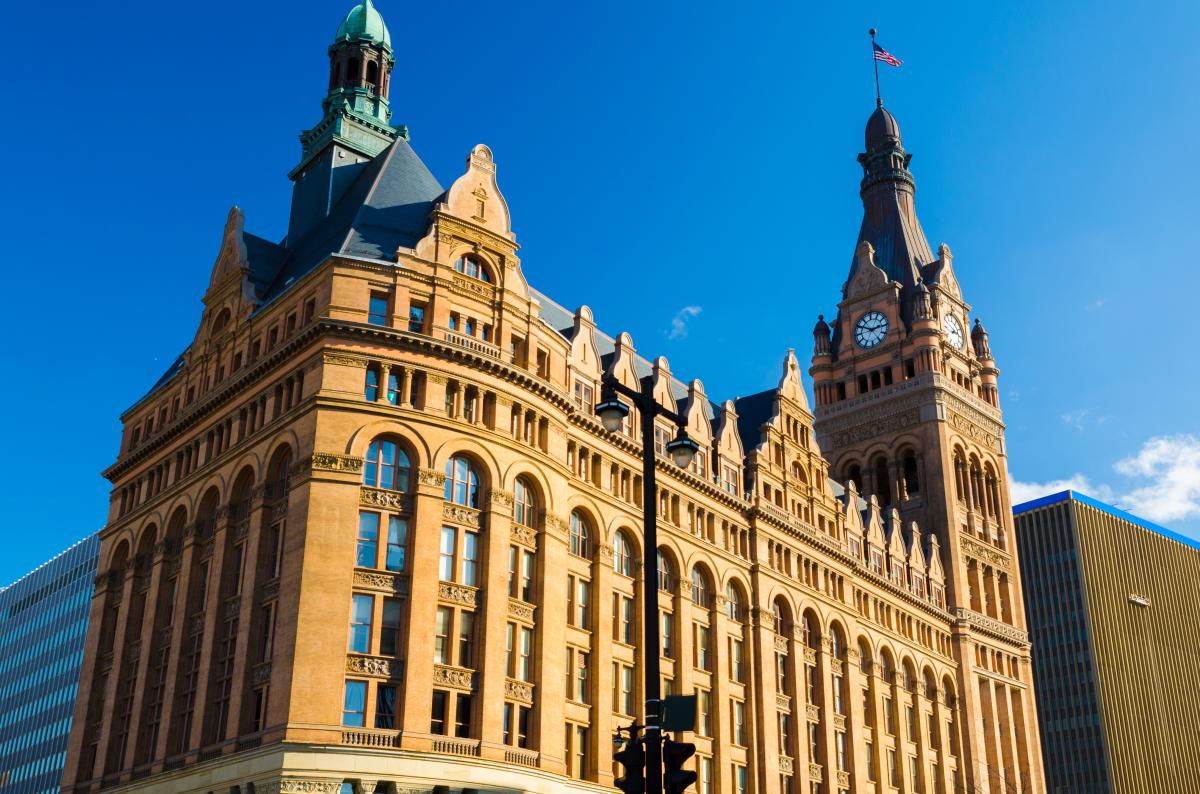
City Hall (1897)
At the turn of the century, Milwaukee made a statement measuring 353 feet tall. Completed in 1897, City Hall’s Flemish Renaissance Revival façade reflects the city’s German heritage. Once one of the tallest buildings in the world, its clock tower still marks time over downtown, chiming through generations of civic pride.
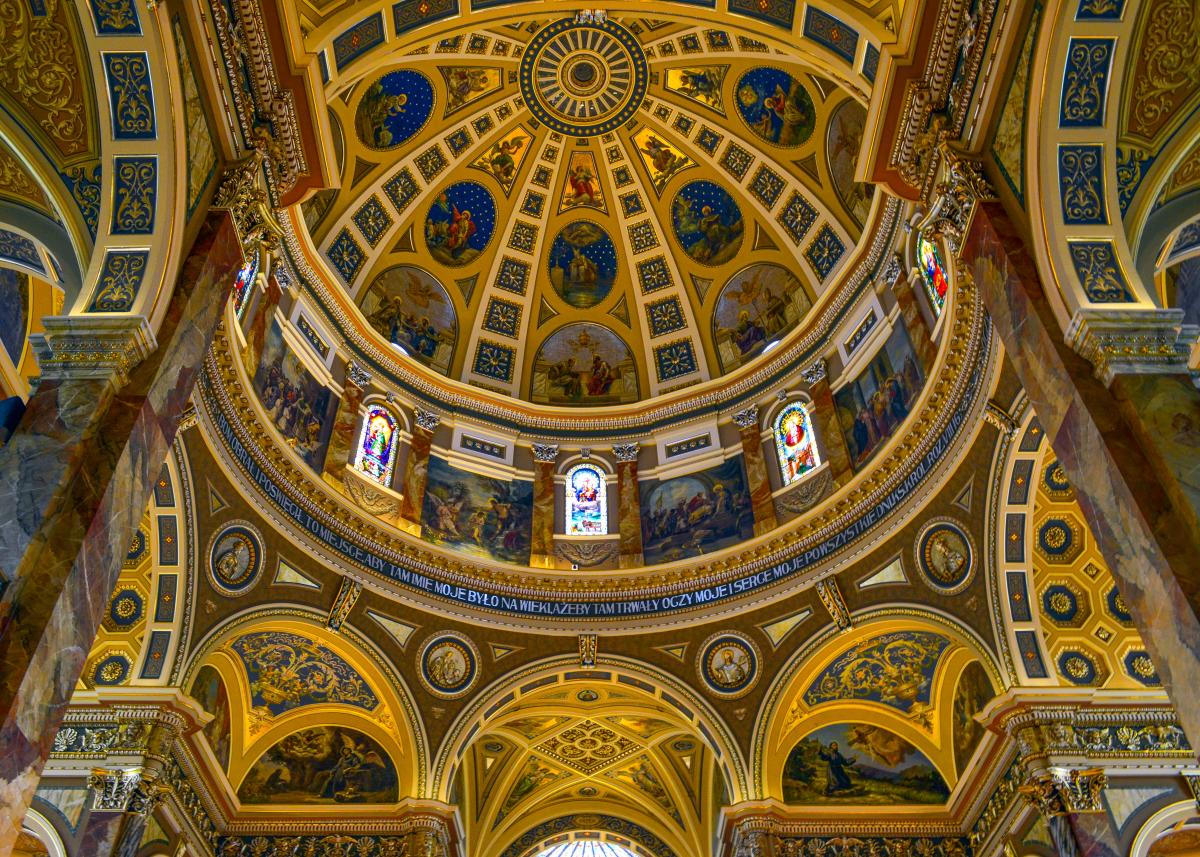
Basilica of St. Josaphat (1901)
Few places tell Milwaukee’s immigrant story like the Basilica of St. Josaphat. Polish parishioners built it with salvaged stone from a demolished Chicago post office, modeling it after St. Peter’s Basilica in Rome and creating one of America’s most breathtaking churches. Declared the country’s third-ever basilica in 1929, its massive dome and murals rival Europe’s great cathedrals.
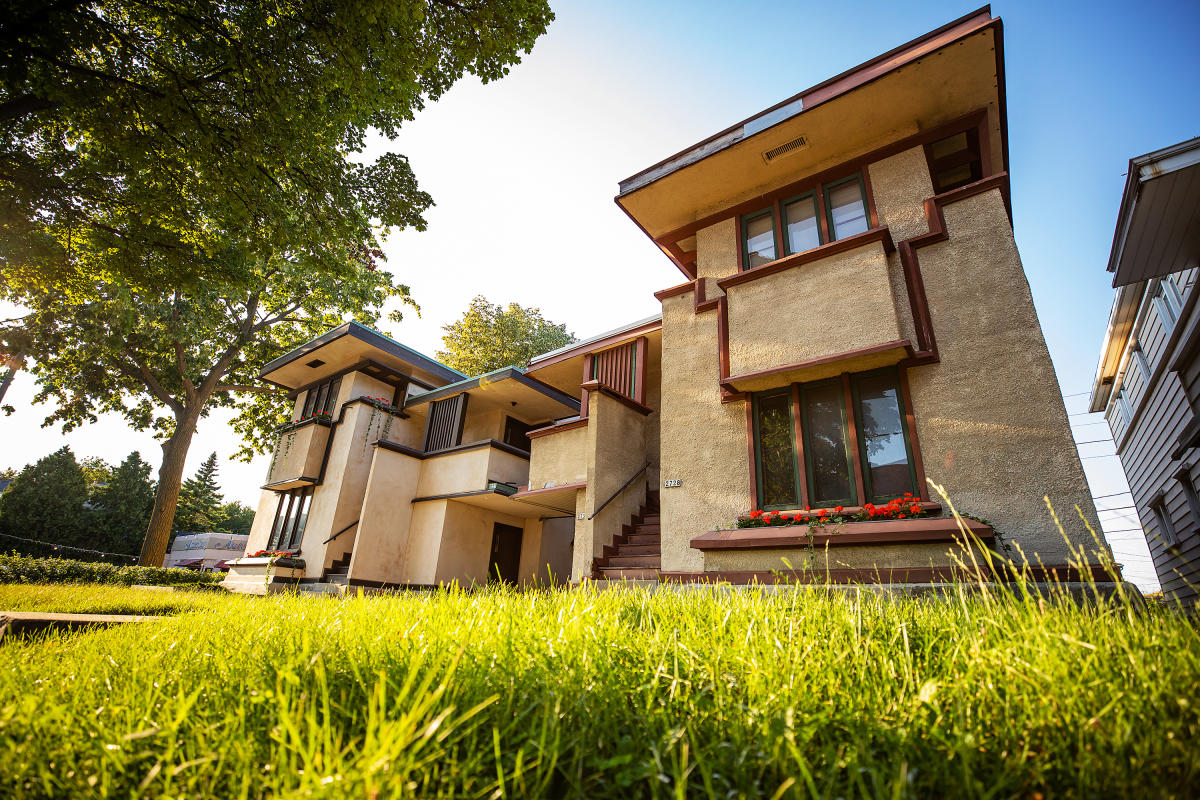
Burnham Block (1916)
Frank Lloyd Wright’s Burnham Block represents his dream of beautiful, affordable design. These modest system-built homes were pre-cut, shipped and assembled on site as early examples of efficient, accessible architecture. Today, visitors can tour the homes and experience Wright’s vision for everyday innovation.
Gas Light Building (1930)
Long before smartphone forecasts, Milwaukeeans checked the sky, and the Gas Light Building. Built in 1930, this Art Deco icon uses a glowing beacon to announce the weather: red for warmer, gold for colder, blue for steady skies. The light still shines today, illuminating both skyline and history.
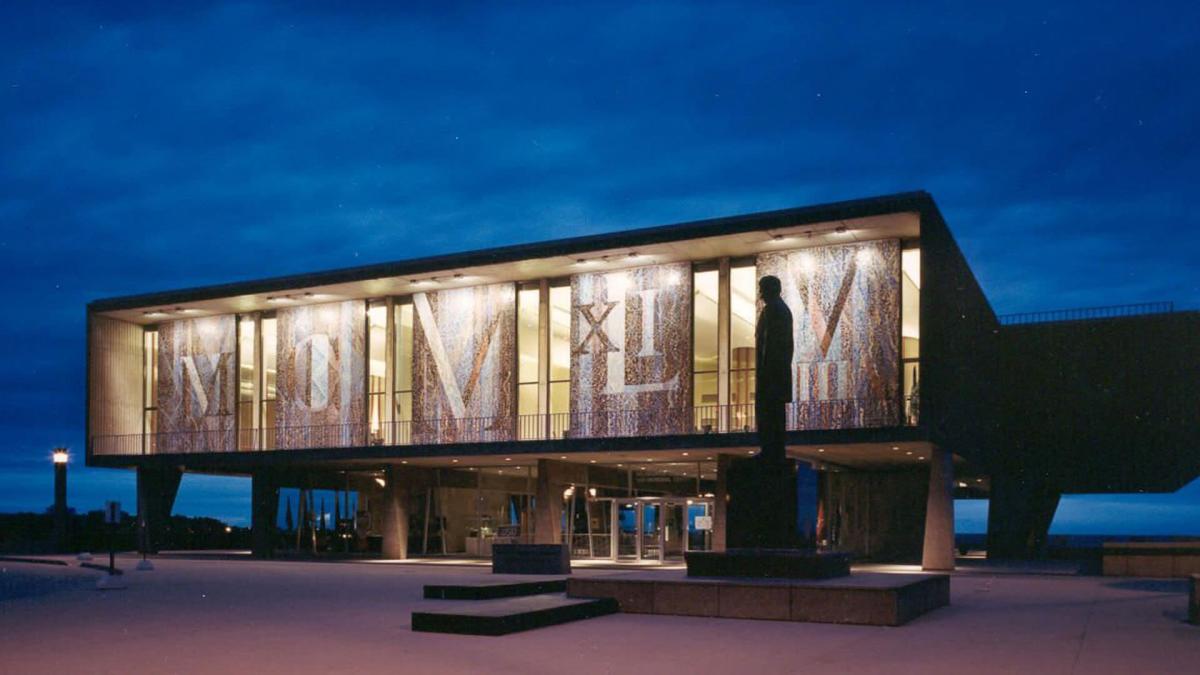
War Memorial Center (1957)
Perched above Lake Michigan, the War Memorial Center is modernism with meaning. Designed by Eero Saarinen, its sweeping concrete wings honor Milwaukee’s veterans and symbolize peace rising from conflict. Part sculpture, part sanctuary, it remains a lakefront landmark for remembrance and reflection.
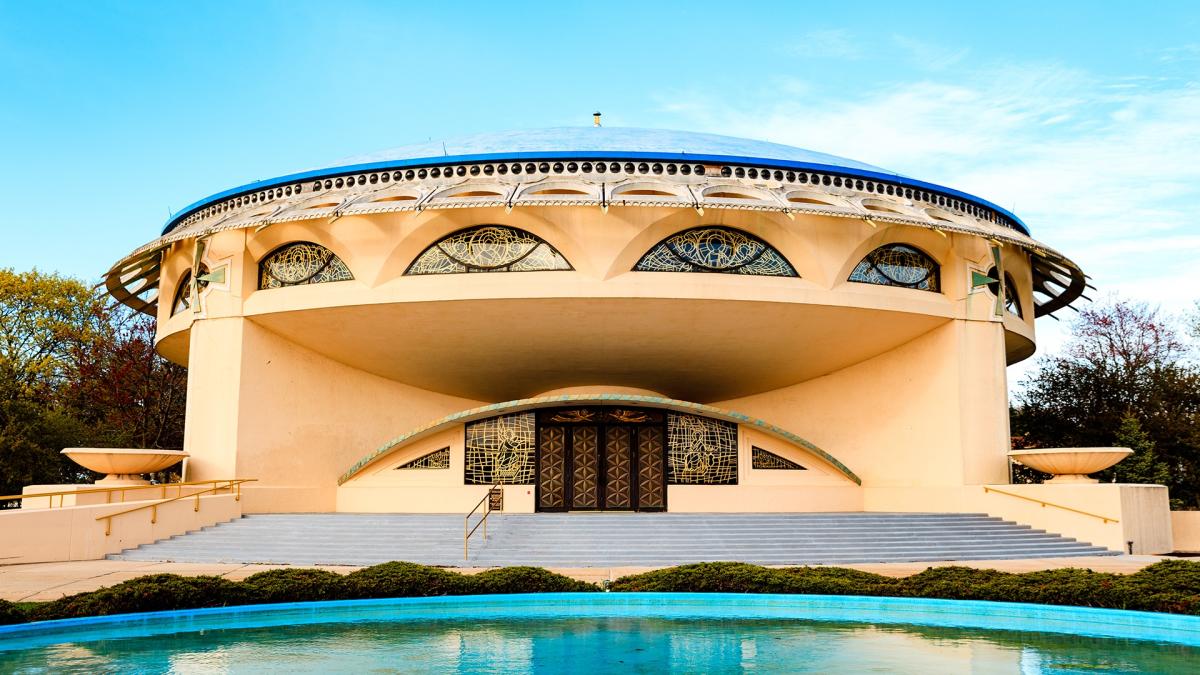
Annunciation Greek Orthodox Church (1961)
Frank Lloyd Wright’s circular Annunciation Greek Orthodox Church is impossible to miss, with its copper dome gleaming on Milwaukee’s west side. Blending Byzantine inspiration with modern aesthetics, the structure embodies harmony and continuity. It remains one of the city’s most distinctive and serene spaces.
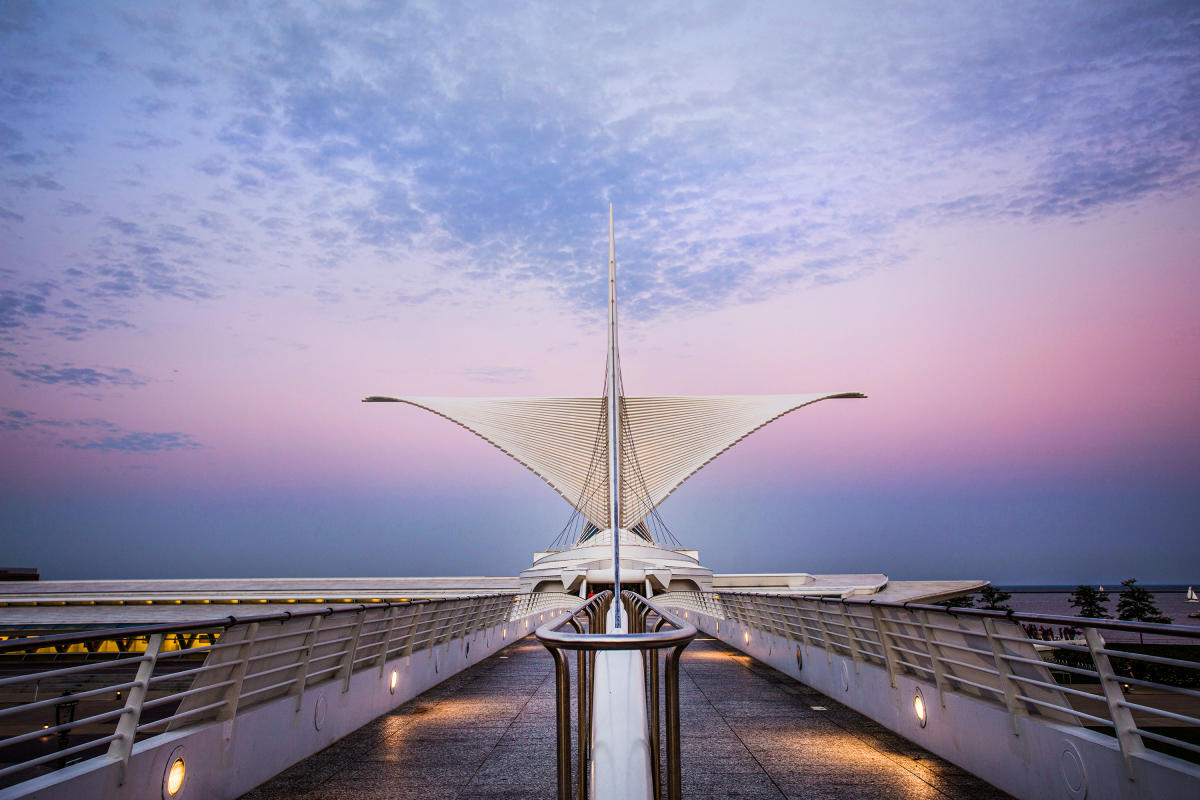
Milwaukee Art Museum’s Quadracci Pavilion (2001)
If Milwaukee had wings, they’d be the steel sails of the Milwaukee Art Museum. Santiago Calatrava’s Quadracci Pavilion transformed the skyline into sculpture, its Burke Brise Soleil opening each morning over Lake Michigan and flapping at noon. Inside and out, the museum is a testament to how design can make a city feel alive.
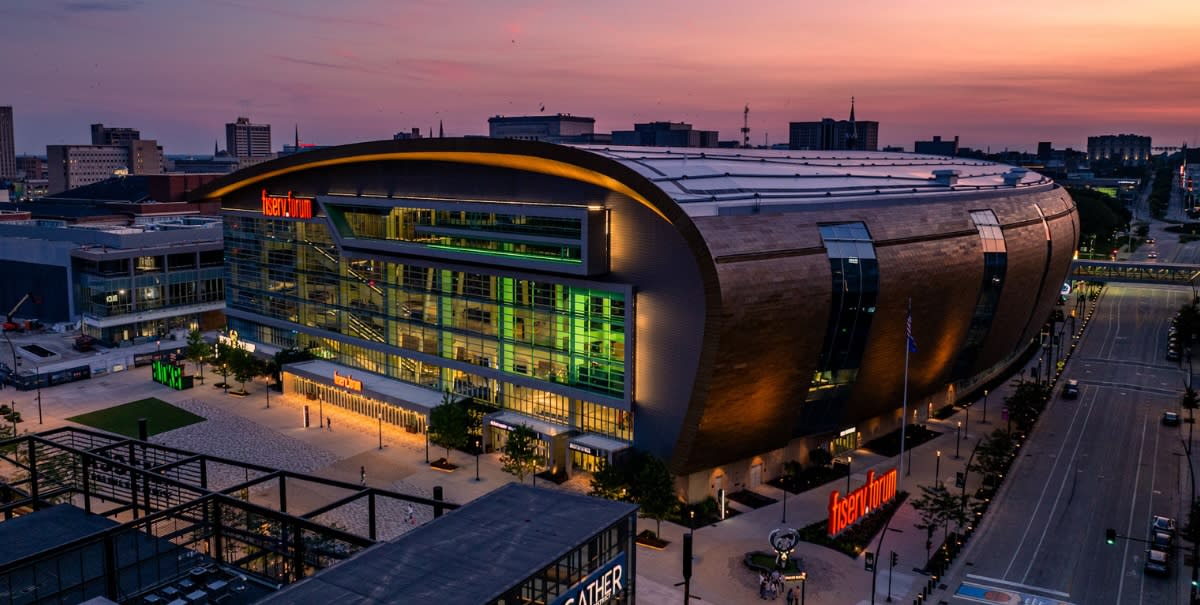
Fiserv Forum (2017)
At the heart of downtown, Fiserv Forum reflects the city’s energy and identity. Opened in 2017, its curving roofline nods to Lake Michigan’s waves and a basketball’s arc. The bird-safe glass arena anchors the Deer District plaza, where Milwaukee gathers for sports, concerts and community.
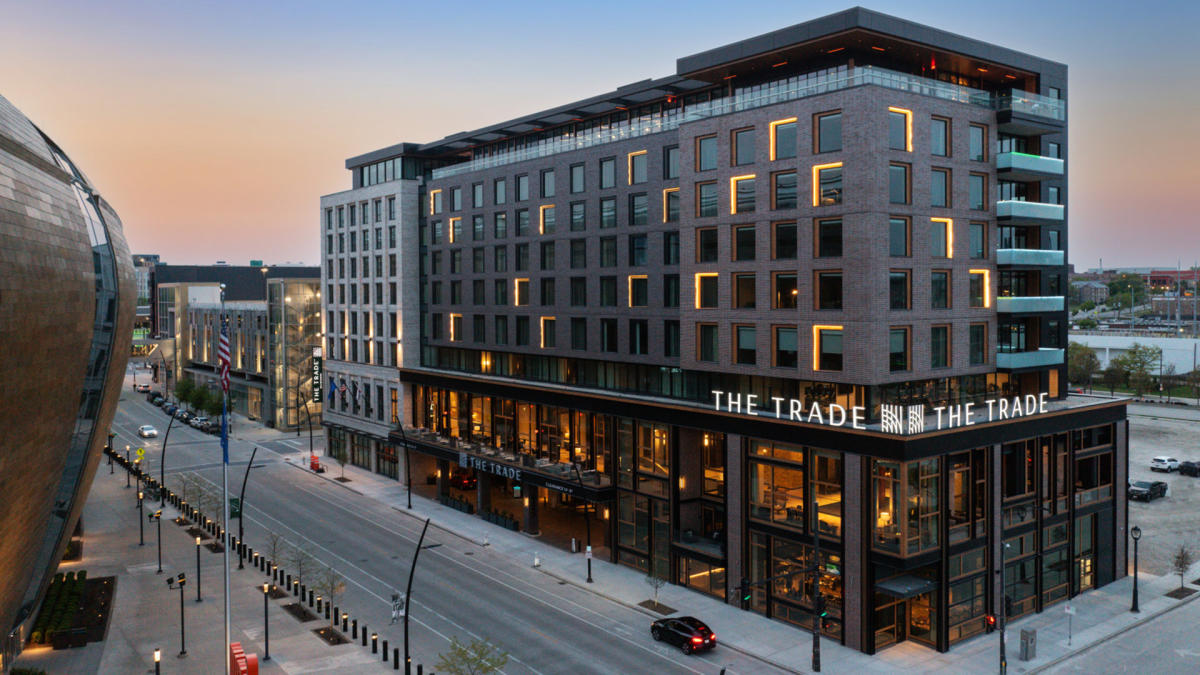
The Trade, a Marriott Autograph Collection Hotel (2023)
Milwaukee’s newest luxury stay celebrates the city’s makers. The Trade honors craftsmanship in every detail, as leather, brass and wood accents pay tribute to the city’s industrial spirit. Across from Fiserv Forum, it’s both a reflection of Milwaukee’s past and a symbol of its future: built strong, smart and to last.
You can check out many of these architectural marvels, along with behind-the-scenes glimpses of many more Milwaukee icons, during Doors Open MKE. Plan your Milwaukee getaway and book your architectural escape today!