






National recognition highlights Milwaukee's renewable energy investments, water stewardship and citywide sustainability efforts.
Milwaukee is earning national recognition for its commitment to a more sustainable future, giving meeting planners another compelling reason to bring their events to the city.
The City of Milwaukee has achieved LEED Gold certification for cities through the U.S. Green Building Council, recognizing its environmental performance, energy efficiency, water stewardship, transportation and quality of life. The designation evaluates sustainability efforts across the entire city, providing independent verification of Milwaukee’s commitment to environmental responsibility.
Milwaukee earned 65 points toward the certification, with particularly strong performance in water efficiency, transportation and land use, and quality of life. The recognition reflects years of collaboration and investment in initiatives that are helping shape a more sustainable city.
For associations, corporations and event organizers prioritizing sustainability, Milwaukee’s LEED Gold designation adds another reason to consider the destination. Combined with its award-winning Baird Center, walkable downtown, growing hospitality offerings and continued investment in infrastructure, Milwaukee offers a place where major events and environmental responsibility go hand in hand.
“Milwaukee is proud to be a LEED Gold-certified city, a nationally recognized distinction that reflects our commitment to sustainability, environmental responsibility and quality of life,” said Josh Albrecht, chief marketing officer of Visit Milwaukee. “From our world-class convention facilities to investments in renewable energy and water stewardship, Milwaukee offers meeting planners a destination committed to a more sustainable future.”
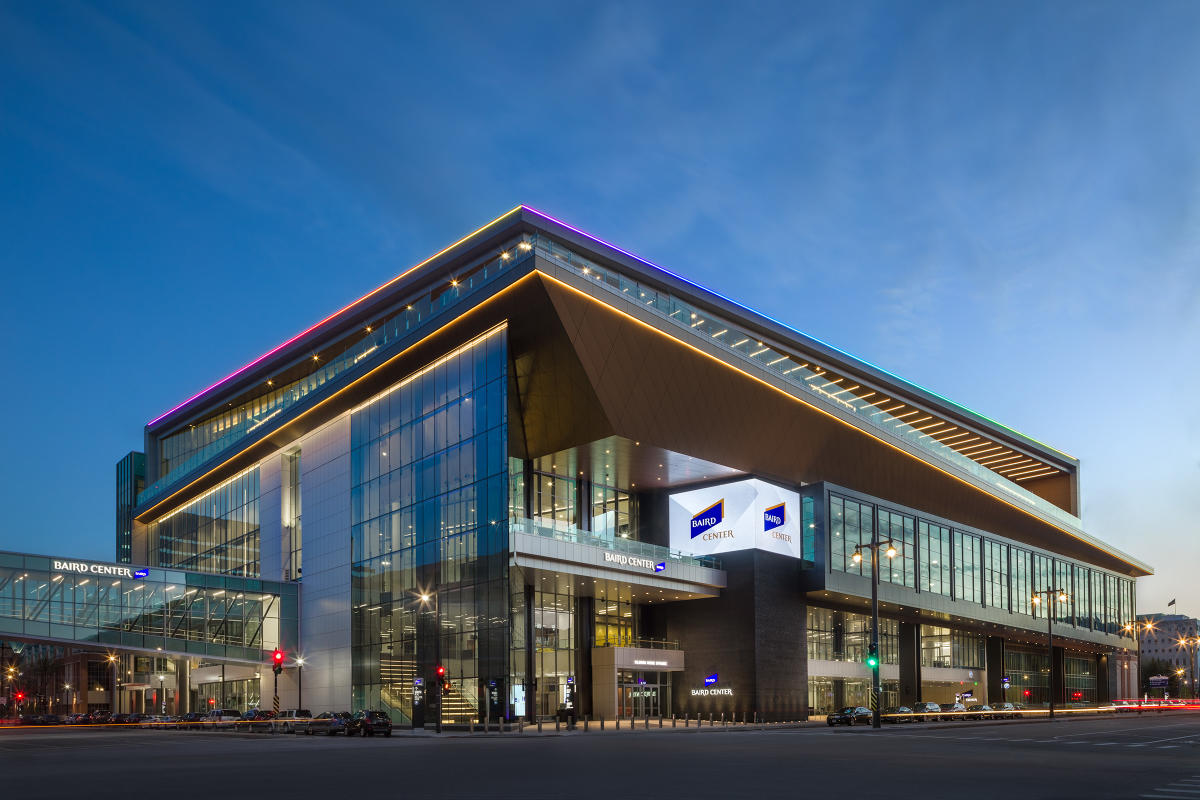
The certification complements Milwaukee’s continued investment in its meetings and conventions industry, including the $456 million expansion of Baird Center. The LEED Gold-certified convention facility offers 1.3 million square feet of space and was recently named to EXHIBITOR Magazine’s 2027 Centers of Excellence list for the third consecutive year. One of just 25 convention centers recognized across the United States and Canada, Baird Center earned the distinction through evaluations of its facilities, location, service and execution, incorporating feedback from event organizers and exhibit managers.
A Sustainable Destination for Meetings and Conventions
Milwaukee's LEED Gold certification comes as meeting planners increasingly seek destinations that align with their organizations' environmental goals. For associations and corporations with formal sustainability requirements, the designation provides third-party recognition of Milwaukee's citywide environmental performance.
Other LEED-certified developments throughout Milwaukee include Fiserv Forum, Potawatomi Casino | Hotel, and the Northwestern Mutual Tower and Commons. The Brewery District, a redevelopment of the former Pabst brewery complex that includes the boutique hotel property Brewhouse Inn & Suites, has also earned LEED Platinum certification.
Beyond its meeting venues, Milwaukee's compact downtown, accessible transportation options, and proximity to hotels, restaurants and cultural attractions let attendees explore the city during their stay.
Powering Milwaukee With Renewable Energy
One of Milwaukee's most significant sustainability achievements is its investment in renewable energy. Today, 80 City of Milwaukee buildings are powered by 100% renewable electricity, including libraries, health centers, fire stations and police stations.
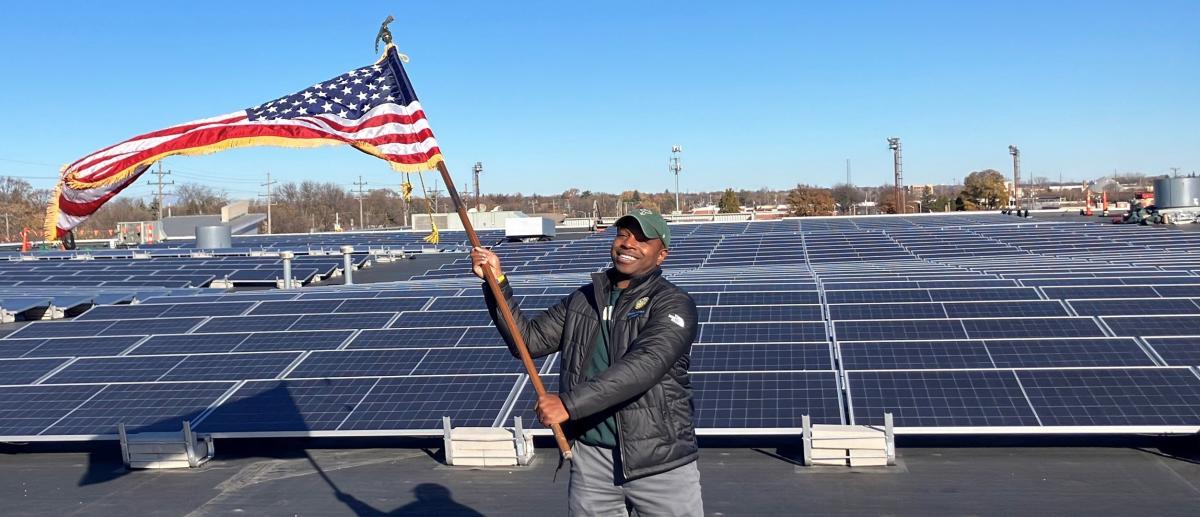
In September 2026, the city celebrated the completion of its largest solar installation to date, a 6.85-megawatt solar array built on a former municipal landfill near Milwaukee Mitchell International Airport.
The project includes a 4.6-megawatt expansion of an existing solar installation, turning land with limited development potential into a source of renewable energy for municipal operations.
The city has also invested in rooftop solar installations at municipal facilities, including the Central Library, Department of Public Works Field Headquarters and Milwaukee Police Department District 3 station.
These projects support Milwaukee's broader goal of transitioning municipal buildings to 100% renewable electricity by 2030.
Protecting Milwaukee's Waterways and Green Spaces
Located along Lake Michigan and at the confluence of three rivers, Milwaukee has made water stewardship a central part of its environmental efforts.
Decades of investment by the City of Milwaukee, state agencies and regional partners have helped restore the city’s waterways. Smithsonian highlighted that progress, reporting that fish diversity in one Milwaukee River study area increased from about eight species to roughly 40 as conditions improved, with seasonal salmon runs bringing a remarkable wildlife experience into the city. Today, a $450 million waterway cleanup brings together the city, Wisconsin Department of Natural Resources, Milwaukee Metropolitan Sewerage District (MMSD) and other public and private partners to advance that work.
In 2025, Milwaukee joined the international Swimmable Cities Alliance, a global movement advocating for healthier, cleaner and more accessible urban waterways. While Milwaukee’s Lake Michigan beaches already offer opportunities for swimming, the city is working toward a future where its rivers could also become swimmable, reconnecting communities with the natural resources that define the destination.
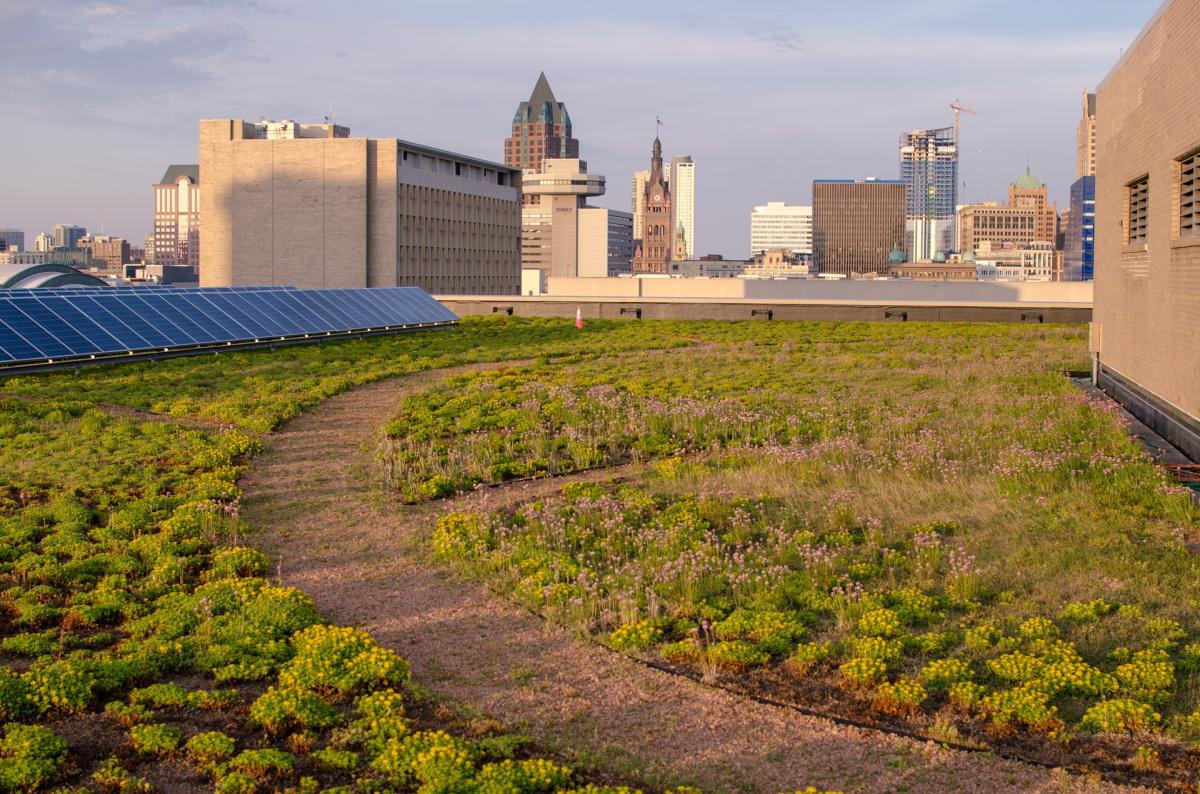
MMSD’s nationally recognized green infrastructure program helps protect those waterways through rain gardens, green roofs, porous pavement and other improvements that manage stormwater where it falls. Across the region, green infrastructure can capture more than 100 million gallons of rainwater each time it rains. The program earned a 2025 National Environmental Achievement Award from the National Association of Clean Water Agencies. Green roofs at Milwaukee City Hall and the Central Library further demonstrate how the city is incorporating stormwater management into its urban landscape.
For meeting planners, these investments demonstrate a commitment to sustainability that extends into the waterfronts, public spaces and neighborhoods their attendees experience.
Advancing Cleaner Transportation and Climate Goals
Milwaukee’s sustainability efforts also extend to transportation, building efficiency and long-term climate planning, with options that help meeting attendees explore the destination without a car.
The Milwaukee County Transit System (MCTS) has 14 battery-electric buses in its fleet, introduced through CONNECT 1, the county’s first bus rapid transit line. The nine-mile route combines dedicated bus lanes, advance fare payment and real-time arrival displays to make travel along the Wisconsin Avenue corridor more convenient for residents and visitors.
Bublr Bikes offers traditional and electric-assist bicycles at more than 100 stations within Milwaukee’s city limits, with additional stations in Wauwatosa and West Allis. The city’s Bublr 2.0 initiative is expanding and upgrading the system through a phased rollout of 800 additional e-bikes and 965 new bicycle docks. Alongside The Hop, Milwaukee’s free, electric streetcar, these options give meeting attendees convenient ways to explore downtown and surrounding neighborhoods without renting a car.
The city’s municipal fleet includes more than 150 hybrid vehicles and more than 50 fully electric vehicles, reflecting ongoing investments in cleaner transportation. Milwaukee continues to expand bicycle infrastructure and improve energy efficiency across public and private buildings.
Through its Climate and Equity Plan, adopted in 2023, Milwaukee has established a goal of reducing communitywide greenhouse gas emissions by at least 45% by 2030 and achieving net-zero emissions by 2050 or sooner. The city has also joined the U.S. Department of Energy’s Better Climate Challenge, committing to reduce greenhouse gas emissions from municipal operations by 50% from 2019 levels by 2035.
Together, these initiatives pair measurable environmental goals with transportation choices that residents and meeting attendees can use every day.
Building on Milwaukee's Momentum
Milwaukee's LEED Gold certification reflects years of collaboration among city departments, community organizations, businesses and residents working to advance environmental responsibility.
The designation recognizes the city's progress while establishing a benchmark for continued improvements in energy efficiency, water quality, transportation and quality of life.
As Milwaukee continues to attract meetings, conventions and major events, the recognition reinforces the city's commitment to balancing economic growth with environmental stewardship.
For meeting planners, Milwaukee offers more than a place to gather. It offers a city investing in its infrastructure, natural resources and long-term future.
To learn more about hosting a meeting or convention in Milwaukee, visit VisitMilwaukee.org/Meetings.